(Updated on Jan. 17, 2025, at 4:55 p.m.: We worked with local researcher and media worker Sam Barnes to issue a few minor corrections for this podcast regarding the City of Atlanta’s involvement with the DeKalb County/Blackhall Studios land swap and the exact date of the approval of that land swap. We also offered more clarification surrounding police body cam footage from the day police killed Tortuguita. You can review the corrections in detail here.)
Editor’s note: All attorneys of defendants interviewed were consulted before and during interviews leading up to this publication. Mainline’s legal team has also thoroughly reviewed our reports and interviews for this podcast. This series relies heavily on much of Mainline’s independent reporting that has covered Cop City since June 2021.
Listen to ‘The Process is the Punishment, Episode One’ now on Patreon or Substack.
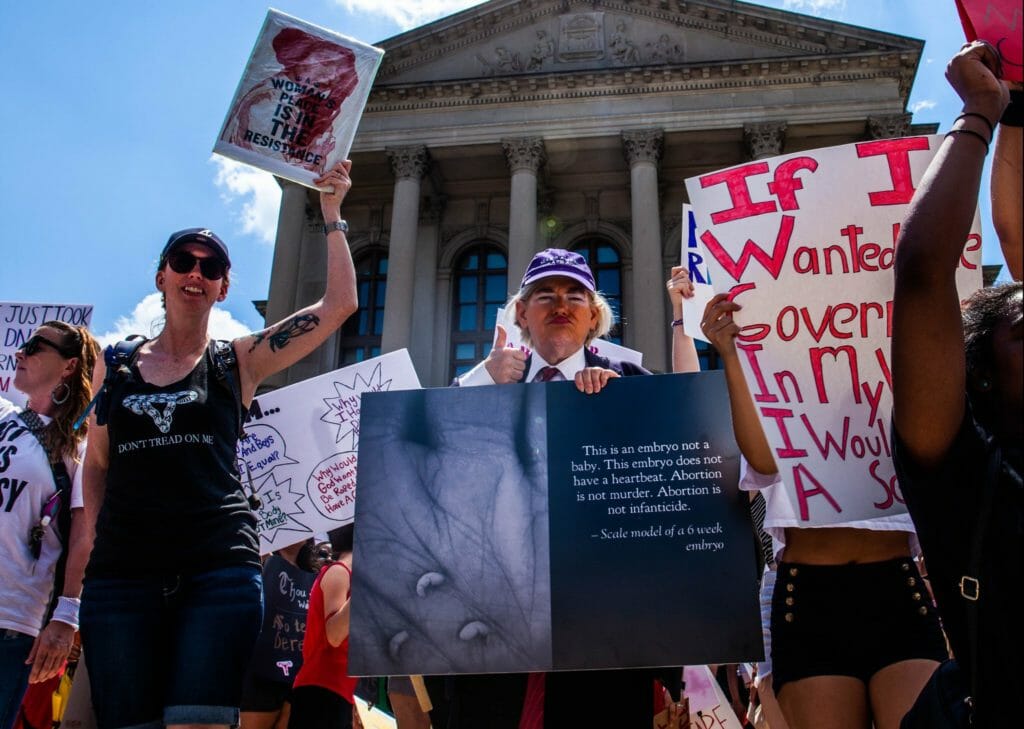
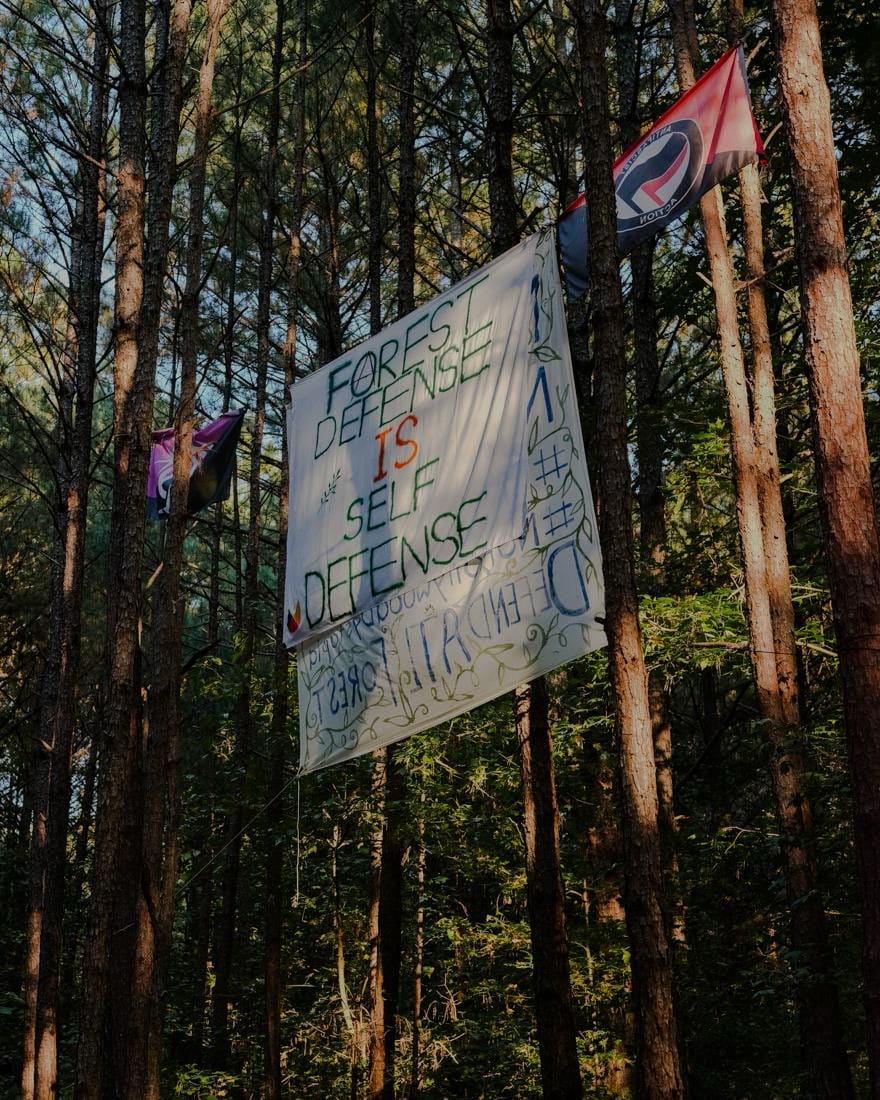
Last year, Mainline founder and publisher Aja Arnold interviewed five of the ATL 61 who were indicted under Georgia’s RICO (Racketeering Influenced and Corrupt Organizations) Act last August for their protest against the controversial police training facility colloquially known as “Cop City.” The facility is being built in Weelaunee Forest, otherwise known as South River Forest, located in unincorporated DeKalb County in Atlanta, Ga. The neighborhood where the facility is located is a predominantly low-income Black neighborhood, and the land was originally inhabited by the Muscogee Creek Tribe before their forced removal in the early 1800s.
[ Related: “An Agricultural History of Cop City” by Ashanté Reese, MOLD Magazine ]
Our interviews with these five defendants and attorneys connected to the case have been curated into a new exclusive podcast series entitled ‘The Process is the Punishment,’ produced by Tåsi Chargualaf and music by Often. In episode one, available now on our Patreon and Substack, we cover how the movement to Stop Cop City and Defend the Atlanta Forest began, the police killing of Tortuguita, and defendants’ reactions to the news of the indictment. We also hear defendants share their stories and describe the impact the indictment has had on their lives, in their own words.
[ We still need financial support to finish this series. To make a donation to support the series, become a subscriber on Patreon or Substack, or make a one-time donation here. ]
More about the movement to stop ‘Cop City’
The lease agreement between the Atlanta Police Foundation and the City of Atlanta was authorized by the Atlanta City Council in a city ordinance in September 2021, following record-breaking dissent from locals and a widespread coalition of environmental, abolition, and small business organizations. Public comment sessions went as long as over 17 hours, with an overwhelming majority strongly opposing the facility. Critics of Cop City cited major concerns for environmental racism, accelerated climate change disaster, and increased violent policing in already over-surveilled and policed areas.
[ Related: “Behind Georgia’s Authoritarian Crackdown on ‘Stop Cop City’ protests” by Aja Arnold, Mainline/The Appeal ]
The lease agreement authorized by Atlanta City Council, against widespread public consent, leased 350 acres of land to the APF for $10 a year for 50 years—marking it as one of the largest land grabs for $500 total. According to the lease, approximately 85 acres are for “improvements related to the public safety training facilities” and 265 acres are to be “preserved” for “greenspace.”
Costs of the facility were originally $90 million, and have ballooned to over $109 million. Two-thirds of the project are reportedly being funded through corporate donations to the APF and one-third through taxpayer dollars. However, over the past two years, it seems the cost for taxpayers has gone up.
On January 18, 2023, Georgia State Patrol officers shot and killed 26-year-old Manuel “Tortuguita” Paez Terán who was an activist residing in an encampment on what was then public land in Intrenchment Creek Park as part of the widespread resistance against Cop City’s construction and the antidemocratic means by which it was passed. Tortuguita, who was nonbinary and Indigenous, was shot by GSP officers up to 14 times, resulting in 57 bullet wounds. An independent autopsy report conducted at the request of Tortuguita’s family said that Tortuguita had their hands up at the time of the shooting, and suggests Tortuguita could have been in a seated position and cross-legged; although, the report says they can’t definitively confirm Tortuguita’s position at the time of the shooting.
[ Related: “Police Killing of Protester Brings Grief, Urgency to Atlanta’s ‘Stop Cop City’ Movement” by Aja Arnold, Mainline/The Appeal ]
Throughout the course of the movement, the civil liberties of protesters and the democratic process have been challenged by city and state officials. The City of Atlanta has repeatedly stifled the democratic process by blocking efforts to put Cop City on the ballot and refusing to count signatures collected for the referendum for Atlanta city voters to decide the fate of Cop City. Since the movement began, at least 42 protesters have been charged with domestic terrorism. Additionally, three bail fund organizers with the Atlanta Solidarity Fund, a local bail fund that provides funds and legal resources to those persecuted for political protest, were targeted and charged with money laundering and charity fraud on May 31, 2023.
Those protesters, the bail fund organizers (known as the ASF3), and others became the ATL 61 following the sweeping RICO indictment issued by the Georgia Attorney General’s office in August 2023.
[ Related: “Prosecutors Smearing Dead ‘Cop City’ Activist by Publicizing Their Diary, Organizers Say,” by Aja Arnold, Mainline/The Appeal ]
Though the charges of the ASF3 have since been dropped, these sweeping charges are representative of larger patterns of repression against people who choose to exercise their right to protest.
The RICO trials are scheduled to proceed at the beginning of 2025. Since the indictment was announced, there has been a concerning lull in media coverage due to a lack of independent media infrastructure, a lack of education around the indictment and legal processes themselves, and a lack of financial resources for journalists nationwide.
This podcast series aims to fill the gaps of mainstream media coverage, providing a comprehensive understanding of the stakes involved, with exclusive interviews with defendants, their attorneys, and other experts. To financially support this coverage, consider making a donation or becoming a subscriber.