How the Ke’nekt Cooperative and Common Future are transforming gentrification’s impact on Black businesses in Atlanta
This article was co-written by Kiyomi Rollins, founder of the Ke’nekt Cooperative, and Chelsea McDaniel, Director of Impact Investments at Common Future.
Walk through Atlanta today and you’ll see a city changing before your eyes. New apartment buildings go up where family-run businesses once stood. Cafés and condos replace corner stores and gathering places. For many longtime residents—especially Black Atlantans—these changes are less about progress and more about loss.
Taking a look back, Atlanta’s Black history is not just a chapter in the city’s story, but the foundation the city is built on. Generations of Black Atlantans shaped the institutions, neighborhoods, and movements that made this city the cradle of the Civil Rights Movement and a national center of Black culture, commerce, and political power. From historic churches to the campuses of Morehouse and Spelman, Black communities have forged Atlanta’s character and set the stage for its future.
The numbers tell a stark story. Over the past forty years, 155 neighborhoods that were once majority-Black have become majority-White. In that same time, 22,000 Black residents were pushed out of neighborhoods like Old Fourth Ward, Kirkwood, and East Atlanta. Rents and property taxes soared. Many saw their communities emptied out, piece by piece.
This isn’t just about buildings or statistics. It’s about the loss of places where people felt they belonged. Family businesses forced to close, neighbors who no longer recognize their own streets, and the quiet fading of traditions that made Atlanta feel like home. When we talk about Atlanta’s Black legacy, we mean the living inheritance shaped by working-class Black Atlantans: the people who built neighborhoods, organized for justice, supported each other through mutual aid, and created the cultural bedrock that has defined this city. In this climate, holding onto that legacy means safeguarding ways for these communities to secure their roots and claim their future, even as the landscape shifts around them.
The Ke’nekt Cooperative is stepping into this moment with intention. Rather than simply reacting to displacement, the cooperative is building a space where Black businesses and community organizations can truly invest in their future and feel a sense of belonging. Here, entrepreneurs, artists, and neighbors come together not just to gather, but to build something lasting. By centering Black ownership and collaboration, the Ke’nekt Cooperative is helping ensure that Atlanta’s history and creative spirit remain at the heart of the city as it continues to grow.
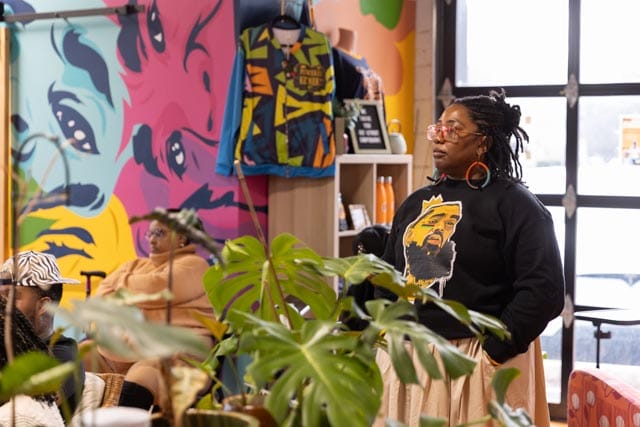
Inside its walls, the idea of a Black Liberated Third Space is more than a concept. It is woven into the everyday life of the Ke’nekt Cooperative. This is a hub for collective ownership, mutual aid, and community action. Here, Black business owners, artists, and neighbors connect not just to transact, but to build networks of trust, support, and shared purpose. In 2024 alone, the Ke’nekt Cooperative served 151 Black businesses and hosted over 117 hours of programming, ranging from business marketplaces and community events to technical assistance and mutual aid. There are workshops where business owners learn new skills, pop-up markets that spotlight local makers, and late-night conversations about how to grow, give back, and build wealth that lasts.
This is a direct investment in community businesses, rooted in principles of Black self-determination, cooperative economics, and mutual aid. At the Ke’nekt Cooperative, mutual aid is not an abstract idea, but an everyday practice where people share resources, knowledge, and encouragement. These efforts shift control of capital, space, and decision-making into the hands of Black residents and legacy business owners, helping them reclaim power, wealth, and place in a rapidly changing Atlanta.
In a city where so much is slipping away, the Ke’nekt Cooperative is holding the line. And more than that: it’s opening the door to a different future for Atlanta, one built on belonging, stability, and the power of neighbors investing in each other.
Building a Blueprint: Partnership, Ownership, and Wraparound Support
Turning the Ke’nekt Cooperative’s vision into reality took more than funding. It required a partnership built on trust, shared learning, and a willingness to approach things differently. When the Ke’nekt Cooperative and Common Future joined forces, the goal was not just to provide money, but to break down the barriers that have traditionally kept Black businesses out of mainstream financing.
A key part of this approach was patient capital. This type of investment gives organizations time to grow and breathe, with flexible terms and a longer timeline for repayment. Instead of focusing on quick returns, patient capital allows for steady progress and long-term impact. For the Ke’nekt Cooperative, this meant having the time and support needed to launch a community-led lending program that truly serves local businesses.
Common Future’s support did not end with funding. They also offered technical assistance and shared practical lessons from other community-driven organizations. By helping to keep the process accessible and minimizing paperwork, Common Future made it easier for the Ke’nekt Cooperative to focus on building an ecosystem rooted in local ownership and mutual support.
This partnership is proving that there is another way for funders and intermediaries to operate. By centering trust, flexibility, and a commitment to long-term community outcomes, the Ke’nekt Cooperative and Common Future are helping to set a new standard for what meaningful support can look like.
Collective Ownership
Securing a permanent, community-owned space is transformative, both for the Ke’nekt Cooperative and as a model for others facing instability. Too often, Black businesses are at the mercy of landlords or unpredictable market forces, making it difficult to plan beyond the next lease. The Ke’nekt Cooperative’s ownership model changes that dynamic. By grounding the organization in a building owned by its members, the cooperative creates a rare sense of stability. Entrepreneurs and community groups can invest, grow, and look to the future with confidence, knowing their space is secure. This approach fosters shared responsibility and pride, and it lays the groundwork for community wealth that lasts.
Microfinancing
Microfinancing typically means providing small loans to entrepreneurs who are shut out of traditional bank financing. While the model is often intended to help, it has faced criticism for high interest rates and rigid terms that can do more harm than good. The Ke’nekt Cooperative takes a different approach. With support from Common Future, the cooperative provides relationship-based lending focused on trust, flexibility, and partnership, rather than impersonal credit checks or strict repayment schedules. Every loan comes with technical assistance and ongoing support. In 2024, the Ke’nekt Cooperative delivered essential capital to dozens of Black-owned businesses overlooked by banks and mainstream lenders. These loans are not just financial transactions; they are investments in local leadership, neighborhood vitality, and generational wealth that grows when communities have the resources and trust to guide their own futures.
Wraparound Support
The Ke’nekt Cooperative knows that real support goes beyond funding or a workspace. Business owners get practical help with technical issues, advice from peers, and mental health resources that meet them where they are. At every in-person gathering, the cohort might start with a group meditation or journaling exercise, and members regularly check in with each other about challenges and wins. Community wellness guidelines are set together to ensure everyone feels supported. Day-to-day, a group chat allows members to share resources and encouragement. Even applying for support is made accessible, with a simple application and in-person office hours, plus loaner laptops for anyone who needs them. By combining financial, educational, and emotional support, the Ke’nekt Cooperative helps entrepreneurs grow as business owners and as leaders invested in their community.
Meeting the Moment: Anchoring Equity Amid Atlanta’s Next Boom
As Atlanta prepares for the 2026 World Cup, the stakes are even higher. The event brings the promise of new business, energy, and investment to the city, but for many Black-owned businesses, those opportunities remain out of reach. Official World Cup funding comes with restrictions that have left many longtime entrepreneurs on the sidelines. This is where models like the Ke’nekt Cooperative’s and other mutual aid approaches become especially critical.
Through its accelerator model, the Ke’nekt Cooperative is designed to reach exactly those who are most often excluded, such as first-time entrepreneurs, legacy businesses, and anyone navigating Atlanta’s rapidly shifting landscape. The accelerator doesn’t just provide funding, but also offers peer learning, technical assistance, and a supportive network rooted in Black self-determination, cooperative economics, and mutual aid.
For some businesses, the Ke’nekt Cooperative’s flexible, relationship-based support has made it possible to prepare for the World Cup on their own terms, whether that means upgrading their storefronts, expanding their teams, or simply having the stability to adapt. For others, the accelerator offers the resources and breathing room to stabilize and plan for the future, regardless of the next big event.
Ultimately, what’s changing isn’t just who gets a loan or a space. It’s about shifting control—over capital, over property, and over the decisions that shape a neighborhood—back to Black residents and business owners. As demand for this kind of community-rooted support continues to grow, the Ke’nekt Cooperative’s ecosystem of shared space, microfinancing, and wraparound programming is proving what’s possible when investment is guided by those who know their community best.
Looking ahead, the Ke’nekt Cooperative and Common Future are committed to growing this work and welcoming new partners. Together, they are setting a new standard for how communities can challenge systemic exclusion and build a future where prosperity is truly shared.
For Atlanta, and for any city that wants to honor its legacy of Black creativity, resilience, and collective achievement, the way forward is clear. Invest in models where communities set the agenda. The Ke’nekt Cooperative is living proof that when resources and decision-making power are placed in community hands, belonging and shared prosperity become possible.